Home | News | Android

Archive

. . . . . . . . . . . . . . . . . . . . . . .

China market: China Telecom to purchase five million 3G CDMA handsets, paper says

Monday, March 1, 2010

China Telecom will purchase up to five million 3G CDMA-enabled handsets through an open bid that will close on March 8, 2010, according to a Chinese-language Economic Daily News (EDN) report.

China Telecom aims to procure handsets with a unit price ranging from 700-1,999 yuan (US$102.55-292.85) targeting the mid-range segment, EDN said.

Taiwan handset makers, including Inventec Appliances, Compal Communications and HTC are likely to receive some windfall orders, while CDMA chipset vendor VIA Telecom and handset distributor Synnex Technology International (Nokia's sales agent in China) will also benefit from the procurement project, the paper added.


Labels:

Mobile broadband in China to overtake fixed broadband in 2014, says Ovum

According to a new report from Ovum, China's 3G mobile broadband (MBB) connections will overtake fixed broadband connections by 2014. The primary drivers include growing demand for mobility, cheaper devices and attractive pricing strategies for MBB arising from the operator's ambitious 3G growth plans.

Ovum predicts high growth rates of MBB connections over the next few years, from 30 million of total connections in 2010 to 377 million in 2014. That represents 1157% growth from 2010. Ovum expects that handsets will account for 86% of total connections by 2014, explained Tracey Chen, senior analyst at Ovum.

Notebooks currently dominate connections, but handsets will increase dramatically during the next years, overtaking laptop users. This trend is driven by high handset penetration and operator efforts to market mobile Internet services on these handsets. However, notebook users will contribute a disproportionate share of revenue due to more lucrative pricing plans, said Chen.

Extensive municipal government investment in Wi-Fi technology (so-called "wireless city" projects) will be a medium term threat to MBB in the low-end consumer segment, particularly for notebooks, because these Wi-Fi services are offered free of charge. Though Wi-Fi is not allowed on handsets at this time, any relaxation can only increase the threat.

In the long run, the threat posed by Wi-Fi in the low-end market will depend on whether significant government support for Wi-Fi is sustained. In response, the operators offer dual mode 3G plus Wi-Fi datacards, and have chosen a mixed 3G/Wi-Fi strategy.

In contrast to the low-end market, Ovum expects that medium to high-end consumers and enterprise customers will prefer the network coverage and information security advantages of 3G MBB. Operators have worked with a few municipal governments to redeploy 3G networks for use in wireless city projects. This is eating into their 3G spectrum allocations, leading to accelerated consumption of their limited spectrum resources. Spectrum management issues, particularly the allocation of further 3G spectrum, require clarification and will hold back mass deployment of 3G until resolved.

Finally, the China mobile broadband market is in its early stages. In the coming years we expect to see mobile broadband grow in sophistication, with more segmented pricing and packaging, national mobility coverage and wider device choices to attract different user groups.


Labels:

Taiwan market: CHT to bring in BlackBerry smartphones and strengthen ties with Apple

Chunghwa Telecom (CHT) plans to introduce RIM's BlackBerry smartphones into the Taiwan market in the first half of 2010, ending the current monopoly sales of the BlackBerry phones in the local market by Taiwan Mobile, according to CHT.

CHT will purchase the BlackBerry smartphones through a unified procurement project to be implemented by its strategic partner Vodafone in order to push down purchasing costs, CHT noted.

Additionally, CHT will also strengthen its cooperation with Apple to push the sale of iPhones. Taiwan-based channel operator Senao International, of which CHT holds a 30% share, will carry out the cooperation project, under which Senao and Apple will jointly set up four business outlets in Taiwan to promote iPhones, according to Senao.

Senao also plans to venture into the retail handset market in China through an equity investment in Funtalk China, the second largest handset retail channel in China currently, the company revealed.

The Nasdaq-listed Funtalk China plans to increase the number of its business outlets in China to 800 in 2010 from 500-600 currently, according to a Chinese-language Commercial Times report.


Labels:

Taiwan market: Chunghwa Telecom to invest NT$13.5 billion in fiber-optic infrastructure in 2010

Chunghwa Telecom (CHT) will continue setting up its fiber-optic network by investing NT$13.5 billion (US$422 million) in 2010, according to the company.

CHT expects the number of its FTTx (fiber to the home/building) subscribers to reach 2.35 million by the end of 2010, accounting for about 60% of its fixed-line broadband Internet-access users, the company indicated.

Including the planned investment in 2010, CHT said it will have cumulatively invested NT$60 billion in its fiber-optic infrastructure.

source


Labels:

Polkomtel subscribers to benefit from high-speed, smartphone friendly network

Nokia Siemens Networks upgrades Polkomtel’s network to meet growing demand for data and multimedia services.

Poland’s Polkomtel S.A. is increasing its mobile broadband coverage and capacity to provide its subscribers with improved mobile Internet and multimedia services. Nokia Siemens Networks is extending and modernizing Polkomtel’s 3G/HSPA network to make it smartphone friendly and prepare it for the next generation of mobile broadband. The improvements will ensure the network is better able to efficiently handle the data surge sparked by the growing number high-speed data customers as well as that of smart devices.

“To maintain our leadership in providing valuable new services to Polish subscribers , we have decided to upgrade our network for higher speeds and more capacity,” said Miguel Marin, chief technology officer, board member of Polkomtel S.A. “This upgrade will not only prepare our network to handle new technologies like HSPA+ 28,8 or 42 Mbps, but will also help us benefit from the lower energy consumption, and signaling efficiencies of Nokia Siemens Networks’ smartphone friendly technology.”

“Our innovation will bring Polish users a faster broadband experience” said Robert Zajac, head of the Polkomtel Customer Team at Nokia Siemens Networks. “This agreement underlines our long-term, successful partnership with Polkomtel, and allows us to look together towards the future of mobile broadband.”

Under the contract, Nokia Siemens Networks will deploy its compact, energy-efficient Flexi Multiradio base stations that enable the higher speeds and lower latency of HSPA+, by means of simple software upgrades. The upgrade allows Polkomtel to benefit from greater capacity for managing smart device traffic, therefore improving customer experience, and enabling significant cost savings to Polkomtel because of the lower energy consumption of the network.

Nokia Siemens Networks will also provide its NetAct network management system for efficient operation of the network, as well as installation, integration and care services.
About Polkomtel SA

Polkomtel SA is the operator of the largest mobile network in Poland. The network under the Plus brand name was launched in 1996 and currently has about 14 million users.

Since the very beginning, Polkomtel SA has pioneered in introducing the latest technological solutions to the Polish market. Currently, it offers the largest coverage of 3G technology access in Poland as well as the largest coverage of mobile Internet access – 99% of Poland’s population is within iPlus coverage. Its high speed HSDPA technology is available in 1,800 localities in districts covering 60% of Poland’s population, while the fastest technology of HSPA+, enabling speeds of up to 21 MBPS, is available in 11 largest cities. Polkomtel SA has also been the first to set up an online music store in Poland, allowing users to legally download music files for little money, both to laptops and mobile devices.

Polkomtel SA also supports important projects related to security, health protection and sports. In cooperation with Poland’s mountain and water rescue organizations (GOPR, TOPR, WOPR) the Integrated Security System has been created, featuring such important elements as emergency hotlines – in the mountains 0 601 100 110 and on the water – 0 601 100 300 – as well as an online info site www.601100100.


Labels:

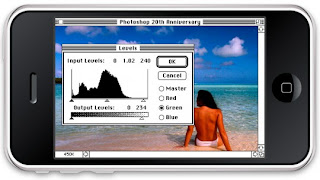
Adult content in Apple has been deleted and adding Photoshop application

Apple has been deleting and adding the Apps Store application to the their pagesAs we know, adult content has been added to Apple applications. With this application, all Apple users can easily access the adult content and porn. As users increase, up from Apple's application is felt disturbing most users.

Apple has deleted the application that displays adult content, this is done at Apple because of the many complaints from users. Because the smartphone application contains the content adult model and porn star. With the abolition of this adult content, Apple users are no longer wished to complain and still maintain a good relationship with Apple users.

Besides remove the adult content, Apple has set enhancements for image editing. The application is Photoshop that can be run on the iPhone device. The main reason Apple chose Photoshop image processing applications because Photoshop is very most popular for image processing. A version of this application was on the App Store page, and for those who want to use Photoshop 1.0 applications can now get at page Apps Store.

New features for the iPhone smartphone and iPad smartphone rumored to be coming with the SDK 3.2. New features video calling, but because the iPhone smartphone does not have a front camera and Ipad has no camera, this feature would require new hardware. Expected with Photoshop application, the Apple users can be increased.


Labels:

Motorola Introduces New Digital Imager Designed to Improve Patient Care in Healthcare Environments

DS6878-HC cordless bar code scanner inhibits the spread of germs, extends mobility and provides real-time information at the point of care.

ATLANTA – HIMSS 2010 (Booth # 7701) – The Enterprise Mobility Solutions division of Motorola, Inc. (NYSE: MOT) announced its newest advanced data capture solution for healthcare – the DS6878-HC cordless 2D imager. The DS6878-HC imager extends the access of critical information to the patient’s bedside, the nurse’s station, operating room and beyond with the highest levels of reliability and performance. Specifically designed to withstand the rigors of everyday use in demanding healthcare environments, the DS6878-HC helps to prevent medical errors, improve patient safety and increase caregiver productivity by providing real-time and convenient access to information.

“Mobility is critical to healthcare organizations as they strive to improve processes, ensure patient safety and overcome challenges associated with staffing shortages,” said Vivian Funkhouser, principal of healthcare solutions, Motorola Enterprise Mobility Solutions. “Motorola’s DS6878-HC digital imager delivers on Motorola’s commitment to improving healthcare operations with a high-performance data capture solution ideal for a multitude of healthcare operations – from medication administration to specimen collection, admitting to asset tracking and dietary management.”

The DS6878-HC redefines imaging technology and allows healthcare personnel to scan documents such as drivers’ licenses and insurance cards for identification, as well as facial images, to quickly and efficiently create and maintain electronic medical records (EMRs). Motorola’s new cordless imager enables hospitals to automate operations, improve data accuracy, increase productivity and streamline operational efficiencies in patient rooms, admitting, laboratories and pharmacies. Easy-to-use, intuitive and ergonomically designed for user comfort, the DS6878-HC helps caregivers focus on their top priority – the patient.

The new DS6878-HC is designed to reduce the spread of germs and protect patients and caregivers against dangerous and deadly illnesses. IP43 sealing, in combination with a specially designed plastic housing, creates a disinfectant-ready design that allows safe wipe-downs and sanitizing with bleach, alcohol, soap and water — without harming the housing or the sensitive scanning components. And with its ability to withstand six-foot drops to concrete, the new digital imager provides dependable operations despite inevitable drops in various healthcare environments.

With its unmatched combination of features and functionality, Motorola’s newest digital imaging solution meets the unique requirements of demanding healthcare facilities with the ability to capture 1D or 2D bar codes, as well as signatures, documents, still photographs and video. Offering a single device to streamline processes throughout the healthcare environment, the DS6878-HC cordless digital imager is built on Motorola’s revolutionary SE4500 scan engine to help guarantee superior performance in fast-paced environments. With its intuitive aiming pattern, the DS6878-HC provides laser-like performance and can capture even the most poorly printed or damaged bar codes with ease. And with omni-directional scanning, it eliminates the need to precisely align bar code and imager for ultimate convenience and productivity for the user while minimizing disruption to resting patients. In addition, Bluetooth® functionality allows the user to easily access a bar code to minimize patient inconvenience and to provide rapid capture of information in emergency situations. And for added convenience and reliability, the DS6878-HC can be charged over the USB cable connected to its base, which also is disinfectant-ready and has been optimized for use on most medical carts. This eliminates the need for a separate power supply, and thus the typical cable management challenges associated with mounting a cordless scanner to a medical cart, computer cart or mobile workstation are greatly reduced.

To help keep the DS6878-HC scanners up and running at peak performance — and in the hands of healthcare personnel — Motorola Enterprise Mobility Services recommends Service from the Start Advance Exchange Support. This exceptional service minimizes downtime with next-business-day replacement of devices that require repair. The DS6878-HC will also be protected from the unexpected with built-in Comprehensive Coverage, which includes normal wear and tear, as well as coverage for internal and external components damaged through accidental breakage. Unforeseen repair expenses are significantly reduced, providing service peace of mind from the date of purchase. Additionally, technical software support helps to keep the DS6878-HC running at optimal efficiency — and medical staff connected to their critical business systems.

For more information on the DS6878-HC cordless digital imager, please visit www.motorola.com/DS6878HC.


Labels:

Blogger Theme By:Google Android .